There’s a specific feeling that hits when you’re watching an anime and something on screen makes you pause and think. Wait, does that actually exist?
Real technology from anime is arriving faster than most people realise. Ghost in the Shell predicted the internet of consciousness. Sword Art Online predicted full-immersion VR as a mainstream concept. Doraemon predicted smartwatches. Anime has a documented track record of getting the future right. Not because animators are prophets but because they asked the right questions decades before Silicon Valley did.
The gap between anime fiction and reality is closing fast. Here are the technologies that feel most like they came straight from an anime lab.
Real Technology From Anime: Neural Interfaces
Ghost in the Shell explored networked human consciousness, cybersecurity as warfare, and identity in a digital age in 1995. In 2026 we have Neuralink implanting brain-computer interfaces in human patients. The trajectory is clear even if the destination is still distant.
Current BCI technology is in its medical phase. Paralysis patients are using neural interfaces to control computers and robotic limbs with thought alone. The applications are genuinely life-changing for the people they help. The Ghost in the Shell version, fully networked consciousness, memories as data, hacking the human mind, is further away but the direction is correct.
The gap between current reality and GitS is mostly time and miniaturisation. The concepts are not science fiction anymore. They’re engineering problems.
Holographic Displays: The AR Anime Dream
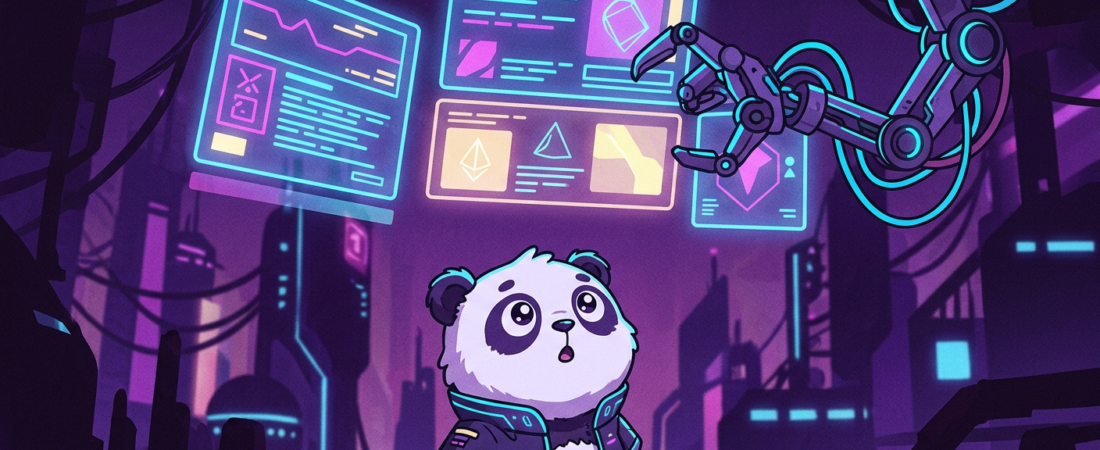
Holographic displays are the most visible real technology from anime. Generals moving virtual units across three-dimensional maps, pilots surrounded by floating data feeds, engineers working with physical projections of digital objects.
The reality in 2026: Microsoft HoloLens, Looking Glass holographic displays, and spatial computing platforms from Apple and Meta are all directionally correct versions of this technology. They’re not as clean as anime holographics. The resolution is lower, the field of view is narrower, and the hardware is heavier than a gesture-activated display floating in air.
The core concept, interacting with three-dimensional digital objects in physical space, is real and improving fast. This is real technology from anime arriving in early form. The anime version is the target, not the fantasy.
Robotic Exoskeletons: Mecha Made Real
Powered human augmentation is real technology from anime that’s already in hospitals. Evangelion’s entry plug and pilot interface system, the idea that a human and a machine could share movement and intent, is the conceptual ancestor of where exoskeleton technology is actually heading. Gundam takes it further, full mechanical suits controlled by human input with a responsiveness that feels biological. The fantasy is a machine that moves like a body.
Current exoskeleton technology exists in medical, military, and industrial contexts. Paralysis patients are walking with powered exoskeleton assistance. Military programmes are testing load-bearing exoskeletons for soldiers carrying heavy equipment. Industrial versions help warehouse workers lift without injury across full shifts.
On the prosthetics side the progress is equally striking. Advanced myoelectric prosthetics read muscle signals from residual limbs and translate them into precise mechanical movement. Neural-controlled prosthetic hands can now convey rudimentary sensation back to the user. The gap between a functional prosthetic and something that feels like a natural limb is closing faster than most people outside the field realise.
Companies like Sarcos, Ekso Bionics, and Boston Dynamics are working on the exoskeleton side. Labs at Johns Hopkins and the University of Pittsburgh are advancing the prosthetics side. The consumer version of either, the suit that moves with you, the limb that feels like yours, is closer than it was five years ago and the direction is clear.
AI Companions: The Chobits Problem
Chobits explored humanoid AI companions, emotional bonds between humans and AI, and questions of AI personhood in 2002. In 2026 we’re having those exact conversations in boardrooms and philosophy departments simultaneously.
Current AI companion technology ranges from advanced language models that maintain consistent personas across conversations to social robots designed for elderly care. The emotional bonds people form with AI systems are real, documented, and increasingly common.
The Chobits version, physically embodied and emotionally sophisticated AI companions, is still some distance away. The philosophical questions the anime raised are not distant at all. They’re being asked right now, with some urgency, by people whose answers will shape how this technology develops.
Anime got here first. As usual. This is real technology from anime landing in real time.
If you want the software side of this, Best AI Tools for Anime Fans in 2026 covers what’s actually usable today.
Space Technology: Gundam Was Right
Gundam, Planetes, Aldnoah Zero. Anime has been imagining human civilisation in space for decades with a specificity that a lot of Western science fiction doesn’t match.
Planetes in particular, about orbital debris collection workers, holds up as near-future space prediction remarkably well. The mundane reality of working in space, the economics of orbital infrastructure, the political tensions of space as contested territory. All of it is directionally accurate to where space development is actually heading.
SpaceX, Blue Origin, and a constellation of smaller private space companies are building the infrastructure for exactly the future Gundam imagined. Orbital stations are being planned. Lunar bases are being designed. The timeline is slower than anime suggested but the destination is the same.
Anime fans make better space optimists than most people. Real technology from anime taught them what to expect. They’ve been imagining the endpoint for decades.
FAQ
Which anime predicted real technology from anime most accurately?
Ghost in the Shell and Planetes are the strongest cases. GitS predicted networked consciousness and cybersecurity warfare. Planetes predicted the economics and logistics of orbital work. Both are directionally correct in ways that hold up to scrutiny.
How close are we to full VR like Sword Art Online?
Of all the real technology from anime, nerve gear is the furthest out. Full sensory immersion via direct neural interface is likely decades away. Current VR through Meta Quest and PlayStation VR is the early ancestor of SAO-style immersion. The visual quality is improving fast. The full sensory loop is a harder problem.
Is there any real technology from anime that will never be real?
Faster-than-light travel is the honest answer. The physics don’t permit it as far as current understanding goes. Everything else is a question of time and engineering rather than fundamental impossibility.
The Signal
Real technology from anime arrives in pieces. Anime fans are rarely surprised by which pieces show up first because they’ve been watching the concepts develop in fiction for decades.
Real technology from anime is no longer a thought experiment. It’s a delivery schedule.
For more on what’s coming next, Tech I Want to Exist in 10 Years looks at near-future predictions from a personal angle.
The cosmos is closer than it looks. 🐼
Panda.exe | Void Frequency